

A Case of Gingivobuccal Sulcus Carcinoma
A 43-year-old man presented with an ulcer in the mouth and swelling in the neck. In a patient with a long-standing history of chronic tobacco chewing, this combination is a red flag that requires urgent evaluation.
Oral cancers can begin with symptoms that may appear minor, including a non-healing ulcer, a white or red patch, or discomfort while chewing. Neck swelling alongside an oral lesion can indicate spread to regional lymph nodes and should never be ignored.
Clinical Evaluation and Diagnosis
A biopsy of the ulcer confirmed squamous cell carcinoma. Contrast-enhanced CT (CECT) of the head and neck was performed to evaluate the local extent of the tumour and assess lymph-node involvement.
The final diagnosis was squamous cell carcinoma of the left lower gingivobuccal sulcus. The gingivobuccal sulcus is the groove between the lower gum and inner cheek. It is a common site for tobacco-associated oral cancer because smokeless tobacco products may be held against this area for prolonged periods.
Surgical Management
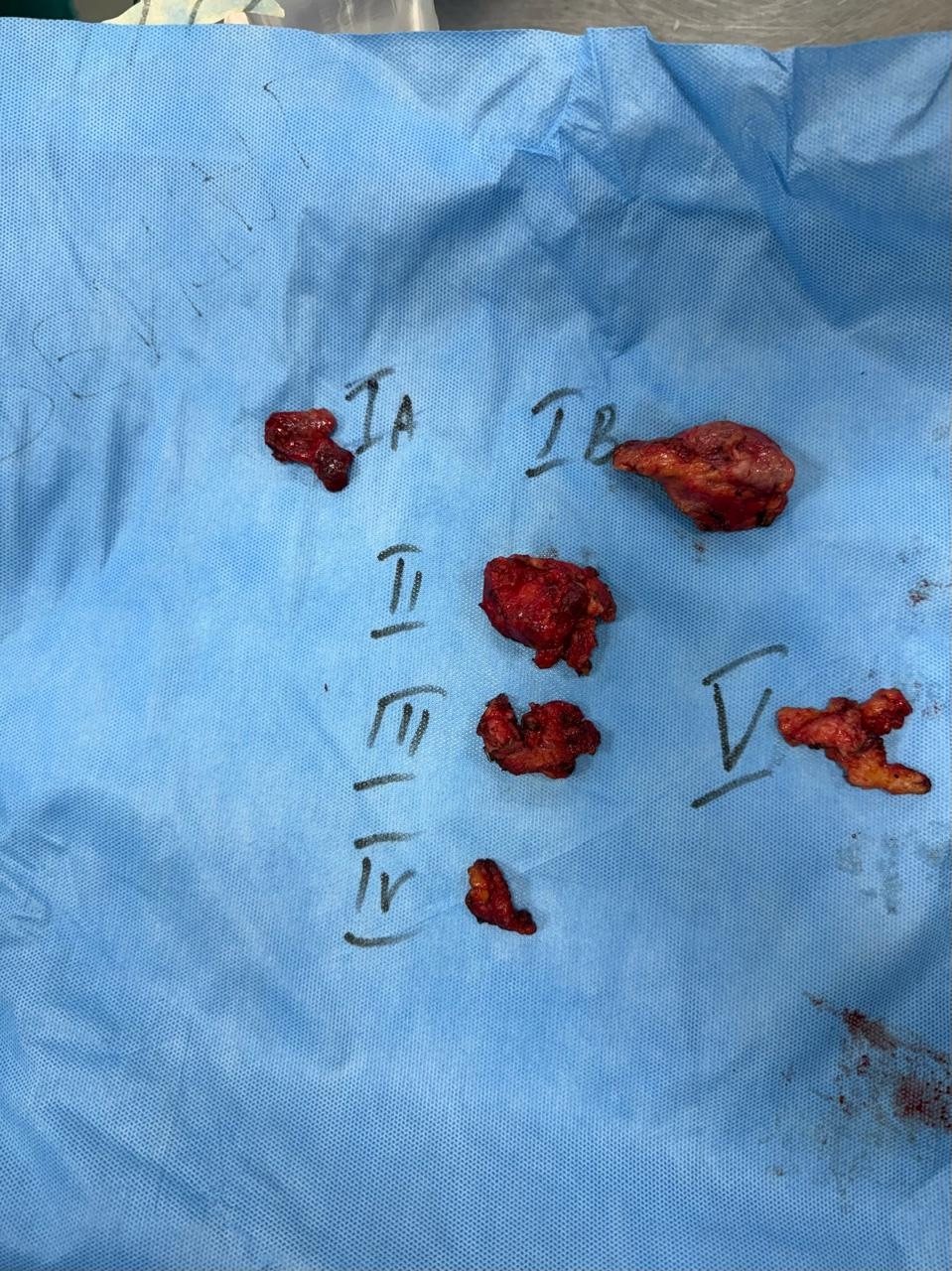
The patient underwent a left composite resection: wide excision of the tumour together with the involved mandibular segment and surrounding soft tissue. A neck dissection was also performed to clear the lymphatic drainage basins at risk.
The resulting defect was reconstructed using a pectoralis major myocutaneous flap. This dependable reconstructive option provides robust blood supply and can support functional and cosmetic recovery after a major oral-cavity and mandibular resection.
Content warning: The clinical images below contain graphic intraoperative and surgical-specimen content.
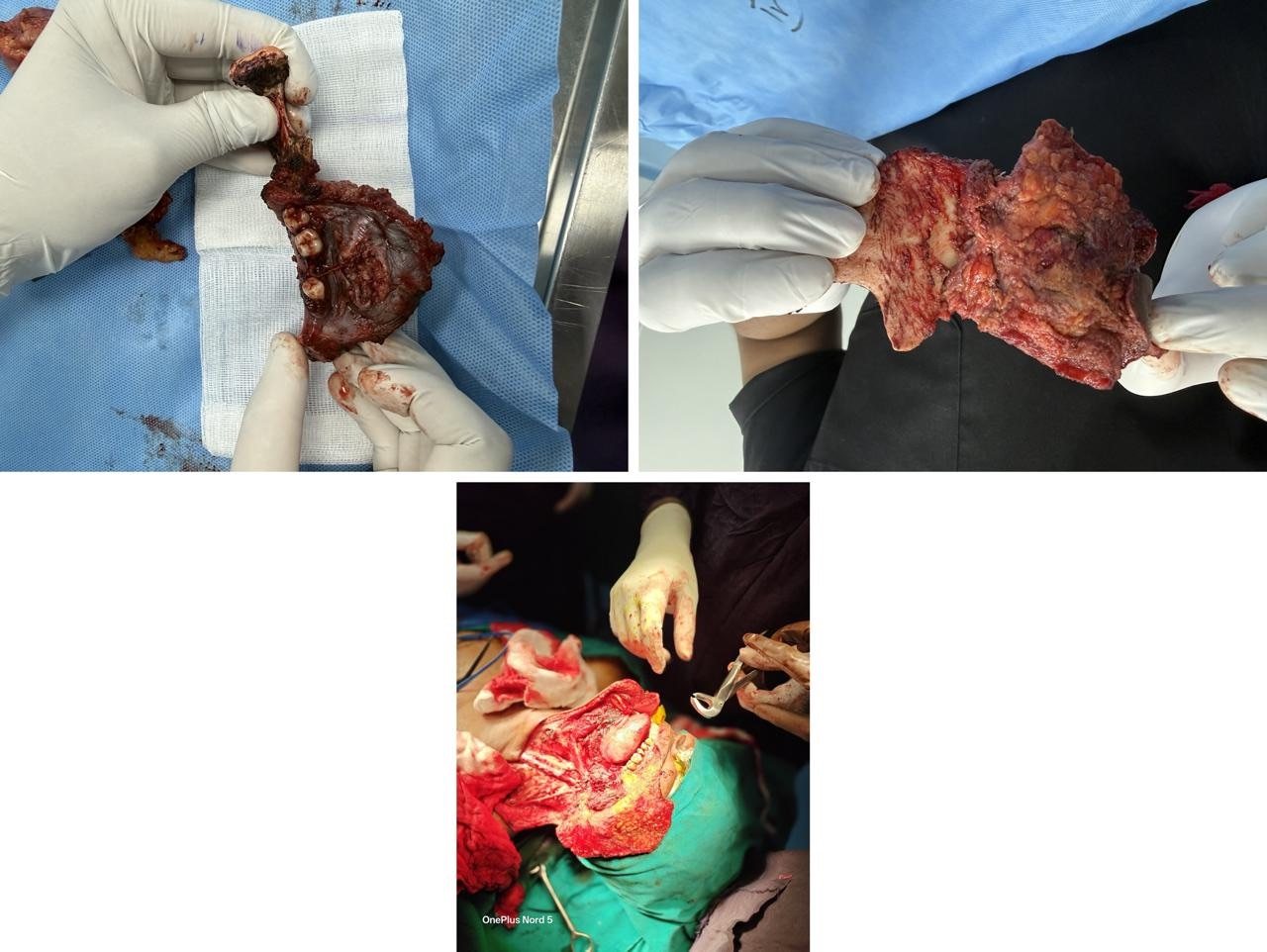
Final Histopathology
The hemimandibulectomy segment, primary tumour, revised margins and neck-dissection specimen were evaluated by histopathology. The report documented the following findings:
| Parameter | Finding |
|---|---|
| Histologic type | Squamous cell carcinoma |
| Histologic grade | G1, well differentiated |
| Tumour size | 3 x 2.5 cm |
| Depth of invasion (DOI) | 1.0 cm |
| Lymphovascular invasion | Absent |
| Perineural invasion | Absent |
| Worst pattern of invasion (WPOI) | 3 |
| Resected margins | All free of tumour, including mucosal and revised margins |
| Lymph nodes examined | 26 |
| Lymph nodes positive | 1, without extranodal extension |
| Pathological stage (AJCC 8th edition) | pT2N1 |
The findings indicate a well-differentiated squamous cell carcinoma with clear margins and one positive lymph node without extranodal extension. This is a relatively favourable pathological picture within the locally advanced, Stage III category. The positive node means the case should still be reviewed by a multidisciplinary tumour board when considering adjuvant treatment under standard head-and-neck cancer protocols.
Why the Pathology Details Matter
- Depth of invasion: DOI, rather than surface size alone, affects T staging for oral-cavity cancer under the AJCC 8th edition.
- Worst pattern of invasion: WPOI is an adverse histologic feature used in risk stratification and may inform treatment discussions beyond formal staging.
- Nodal findings: One positive node without extranodal extension has different prognostic and treatment implications from multiple involved nodes or extranodal spread.
Recovery
The patient tolerated the procedure well and had an uneventful postoperative course. He was discharged on postoperative day 6 following the major head-and-neck resection and flap reconstruction.
The Bigger Picture
- Chronic tobacco chewing is a major, modifiable risk factor for cancers of the buccal mucosa and gingivobuccal sulcus.
- Any oral ulcer that does not heal within 2-3 weeks needs medical evaluation.
- Neck swelling with an oral lesion is a warning sign and should prompt immediate specialist referral.
- Early detection can reduce treatment complexity. Advanced disease may require composite resection, reconstruction and additional therapy.
Oral cancer is largely preventable and can be highly treatable when detected early. Awareness of the risks of tobacco chewing, routine oral self-examination and timely professional assessment remain important tools for reducing its burden.
This clinical case is shared for educational purposes and general awareness. It does not replace an individual medical consultation. Patient-identifying information has not been included.