
Introduction
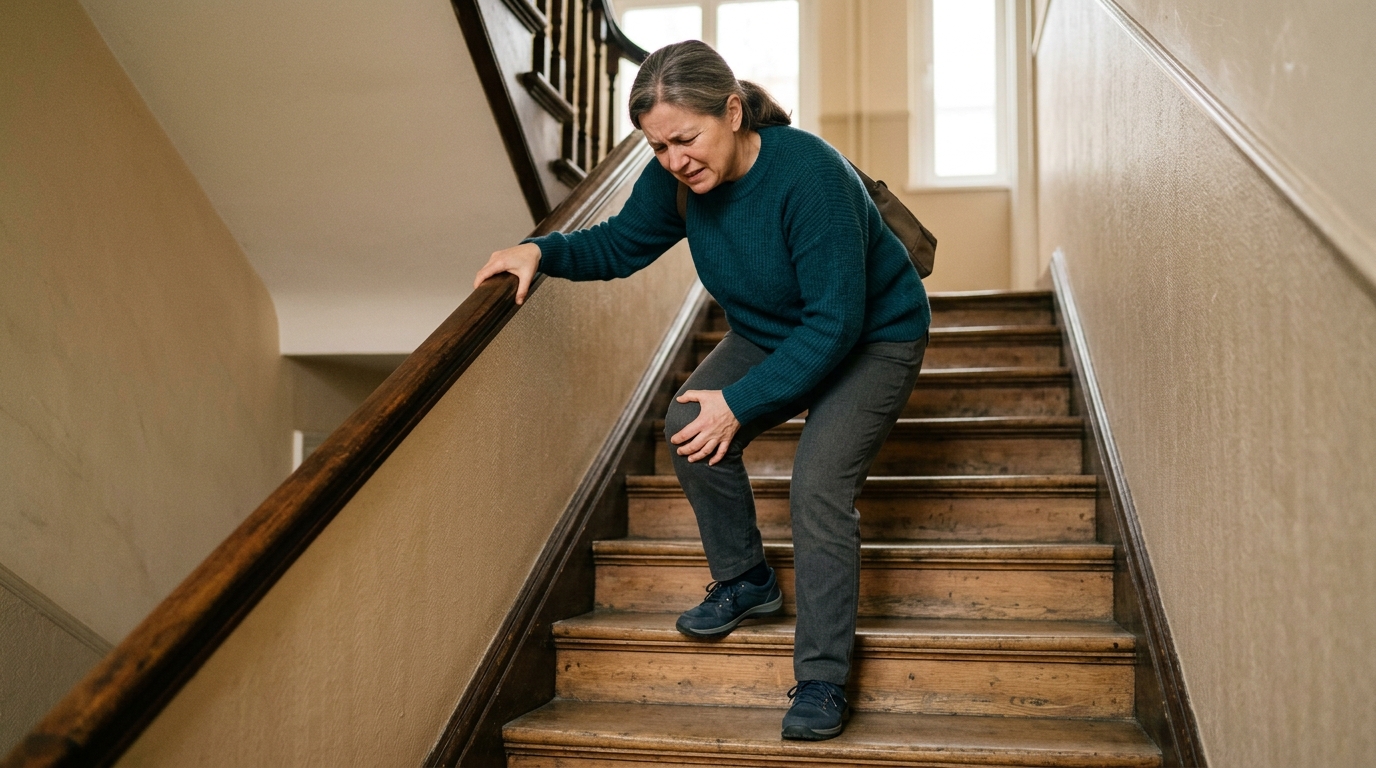
If you experience knee pain when climbing stairs, the discomfort may be related to strain, changes in the kneecap joint, arthritis, or another underlying knee problem. Because stairs place considerable demand on the knee, recurring pain should not simply be ignored. At Prudence Hospitals, the Orthopaedics department provides specialist care for musculoskeletal and joint-related concerns, including conditions affecting the knee. Understanding why the pain occurs can help you recognise when professional evaluation may be appropriate.
Experiencing knee discomfort or difficulty with stairs? Learn about specialist evaluation and joint care at Prudence Hospitals.
Explore Orthopaedic Care at Prudence Hospitals →Why Does Knee Pain Occur When Climbing Stairs?
Climbing stairs requires the knee to bend while supporting much of the body's weight. This increases the workload on the muscles and structures around the knee.
Common reasons for knee pain when climbing stairs include:
- Patellofemoral pain: Pain around or behind the kneecap can become more noticeable while climbing or descending stairs.
- Knee arthritis: Wear and changes within the knee joint can cause pain, stiffness and difficulty with activities such as stair climbing.
- Muscle weakness: Reduced strength around the thigh and hip can affect how forces are distributed through the knee.
- Previous knee injury: An earlier injury may continue to affect knee movement or stability.
- Overuse or strain: Sudden increases in physical activity can place additional stress on the knee.
The exact cause cannot be determined from stair pain alone. Persistent or worsening symptoms require appropriate clinical assessment.
What Does Knee Pain Feel Like When Climbing Stairs?
The location and nature of the pain can provide useful information, although they cannot establish a diagnosis by themselves.
You may experience:
- Pain around the kneecap
- Pain at the front or sides of the knee
- Stiffness after sitting or resting
- Pain while going up or down stairs
- A feeling of weakness or reduced confidence while using stairs
- Swelling or tenderness around the knee
If symptoms repeatedly interfere with walking, stairs or everyday activities, consider consulting an orthopaedic specialist.
When Should You See an Orthopaedic Specialist?
Occasional discomfort after unusual physical activity may settle with rest. However, medical evaluation becomes more important when pain is persistent, recurrent, severe, or progressively affecting daily activities.
Seek professional assessment if you notice:
- Knee pain that continues despite reducing activity
- Increasing difficulty climbing or descending stairs
- Persistent swelling or stiffness
- Pain that interferes with walking or routine activities
- Symptoms following a significant knee injury
- Recurrent knee problems that are becoming more frequent
An orthopaedic evaluation can help identify the underlying cause and determine the appropriate management approach.
How Is Knee Pain Evaluated?
A knee evaluation generally begins with understanding the patient's symptoms and medical history. A specialist may assess:
Symptoms and Medical History
The doctor may ask when the pain started, where it occurs, what activities make it worse, and whether there has been a previous injury.
Physical Examination
The knee may be assessed for movement, tenderness, stability and other physical signs that can help identify the possible source of discomfort.
Further Evaluation
Depending on the clinical findings, the specialist may determine whether additional evaluation is appropriate before deciding on treatment.
The goal is not simply to reduce pain temporarily but to understand why the knee hurts during a specific activity such as stair climbing.
Knee Pain from Arthritis: When Should You Pay Attention?
Arthritis is one possible cause of persistent knee discomfort. Knee arthritis can affect movement and may gradually make activities such as walking, standing or climbing stairs more difficult.
If knee pain is becoming more frequent or limiting everyday activities, early orthopaedic assessment can help determine the condition and available treatment options.
For patients with advanced knee problems requiring surgical treatment, Prudence Hospitals also has expertise in robotic knee replacement using the MISSO Robotic System. The system uses CT imaging to create a 3D model of the knee and assists with bone cuts and implant positioning.
However, not every person with knee pain or arthritis needs knee replacement. The appropriate treatment depends on the individual condition and clinical assessment.
Looking for modern solutions for chronic knee joint pain? Discover comprehensive treatment options from medicine and therapy to robotic-assisted procedures.
Learn More About Orthopaedic Treatment at Prudence Hospitals →Common Mistakes to Avoid
When dealing with recurring knee pain, avoid:
- Ignoring pain that repeatedly returns
- Assuming every knee problem is simply due to age
- Continuing activities that consistently worsen symptoms
- Self-diagnosing the cause based only on where the pain occurs
- Assuming that knee replacement is necessary simply because arthritis is present
Getting the cause assessed can help you understand the most appropriate next step.
Conclusion
Knee pain when climbing stairs should not automatically be dismissed as normal ageing or temporary strain, particularly when it keeps returning or begins affecting everyday movement. Understanding the cause is important for choosing the appropriate care. Prudence Hospitals provides orthopaedic care for knee-related concerns, along with MISSO robotic knee replacement for appropriate patients who require knee replacement surgery.
If recurring knee pain is affecting your daily activities, consult Prudence Hospitals for appropriate orthopaedic evaluation and care.
Frequently Asked Questions
Book an Orthopaedic Consultation
Call +91 90939 66666, book online at www.prudencehospitals.com, or visit Prudence Hospitals at H No - 1-12-121/A, Opp. Yendala Towers, Pragathi Nagar, Nizamabad, Telangana 503003.